If you have ever looked at a Boston luxury condo and paused at the monthly fee, you are not alone. Those dues can look high at first glance, especially in full-service buildings, but they often cover much more than basic upkeep. When you understand what amenities are included, how Massachusetts condo fees work, and what to compare from one building to the next, you can make a smarter decision with more confidence. Let’s dive in.
Why Boston luxury condo fees vary
In Boston’s luxury condo market, you are often paying for a bundled lifestyle, not just a residence. In amenity-rich towers, the monthly fee typically helps cover staffing, shared-space maintenance, reserves, and the operating costs tied to service-heavy features.
That is why two high-end condos can have very different monthly dues. A building with valet service, a staffed lobby, pools, and private resident lounges will usually carry a different cost structure than a building with fewer shared services.
What amenities Boston luxury buildings often include
Luxury condos in Boston tend to group amenities into a few main categories. Knowing these categories can help you compare buildings in a more practical way.
Service and staffing
Many of Boston’s best-known luxury buildings promote service as a major part of daily living. Depending on the property, that can include concierge service, doormen, valet staff, security, housekeeping, and in-residence services.
Examples in current Boston luxury buildings include concierge and club service at Millennium Tower, concierge and valet at Four Seasons One Dalton, and 24-hour concierge and valet service at Echelon Seaport. These features can add convenience, but they also add ongoing operating costs.
Wellness amenities
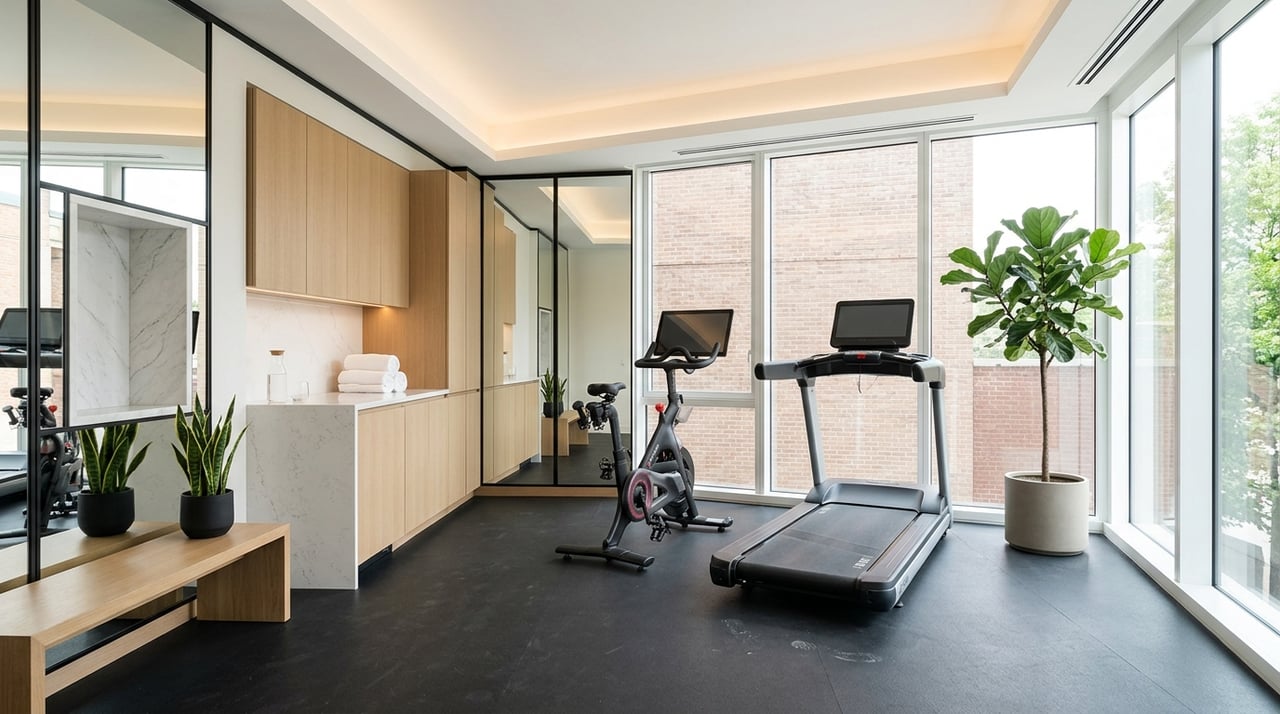
Wellness is another big part of the luxury condo experience in Boston. Many buildings offer fitness facilities, pools, spa areas, and wellness-focused shared spaces.
Millennium Tower advertises a 10,000-square-foot fitness facility along with a club, pool, and spa. One Dalton offers a heated pool, wellness area, and spa, while Echelon Seaport includes indoor and outdoor pools and a full-service fitness center.
Social and entertaining spaces
Shared gathering spaces can be a major draw, especially if you enjoy entertaining outside your unit. These may include lounges, libraries, screening rooms, terraces, roof decks, or clubrooms.
For example, Millennium Tower includes a screening room, parlor, library, and function room. Echelon Seaport advertises a sky lounge and terraces, while 45 Province promotes a roof deck, rooftop pool, club-level lounge, and screening space.
Parking and logistics
In Boston, parking is often a meaningful part of the luxury condo package. Current listings at One Dalton, 180 Beacon, and Echelon show that parking can be an important amenity and a notable fee item.
If you own a car or expect frequent guests, parking can be a major quality-of-life feature. It is also one of the details you should confirm carefully, since parking may be included, assigned separately, or handled through additional costs.
How Massachusetts condo fees are structured
Massachusetts gives condo associations a clear legal framework under Chapter 183A. Common expenses include administration, maintenance, repair, or replacement of common areas and facilities.
The law’s definition of common areas and facilities includes items such as elevators, recreational facilities, parking areas, storage spaces, and other shared systems. That helps explain why luxury condo fees often reach beyond simple hallway cleaning or landscaping.
Massachusetts also requires an adequate replacement reserve fund to be collected as part of common expenses and kept separate from operating funds. In simple terms, that means part of your monthly condo fee may go toward future building needs, not just current bills.
How monthly fees are usually set
According to Massachusetts condo guidance, fees are typically based on the annual budget, paid monthly, and allocated by percentage interest. Condo bylaws must explain how maintenance, repair, and replacement are funded and how owners’ shares of common expenses are collected.
That matters because the monthly number alone does not tell the full story. You also need to know how the association budgets, what it includes, and whether reserves appear strong relative to the building’s expected capital needs.
Special assessments matter too
A monthly fee is only one part of the cost picture. Massachusetts describes special assessments as amounts needed beyond the budget and reserves to replace a capital item.
In real terms, that means a building can have a moderate monthly fee but still ask owners for additional money if a major expense comes up. This is why buyers should review reserve information and ask whether any special assessment is planned or under discussion.
What current Boston listings show
Current listings in Boston show just how wide the range can be. In Back Bay, a residence at 180 Beacon lists HOA dues of $2,076 per month, with amenities that include 24-hour concierge, valet parking, on-site management, a fitness room, and a community room.
In the Seaport, 133 Seaport Boulevard #1022 at Echelon lists monthly dues of $2,267. That listing says the fee includes items such as heat, gas, water, sewer, insurance, security, maintenance structure, maintenance grounds, snow removal, trash, and reserve funds, along with amenities like a pool, fitness center, clubhouse, and elevators.
At One Dalton in Back Bay, one current listing shows HOA dues of $8,012 per month. That listing includes amenities such as a pool, recreation facilities, fitness center, sauna or steam, clubroom, and parking, with services including heat, gas, water, sewer, insurance, security, maintenance structure, maintenance grounds, snow removal, and trash.
Current One Dalton listings also show significant variation within the same building, with some residences listing HOA dues above $11,000 and $15,000 per month. Listings also separate annual property taxes from HOA dues, which is a useful reminder that condo fees are only one part of your monthly carrying cost.
Higher fees do not always mean poor value
It is easy to assume that a higher monthly fee is simply overhead, but that is not always true. In some Boston luxury buildings, the condo fee bundles in utilities, services, insurance-related building costs, parking-related components, security, and reserve contributions.
That means a higher number may reflect a broader package rather than a weaker value proposition. The real question is whether the fee aligns with the services, facilities, and long-term building planning you will actually benefit from.
What to compare beyond the sticker price
When you compare Boston luxury condos, focus on what the fee includes and what it leaves out. A lower fee is not automatically better if you will be paying for major items elsewhere.
Here are some of the most useful comparison points:
- Which utilities are included, such as heat, gas, water, or sewer
- Whether parking is included, limited, or separate
- Whether storage is included
- Whether reserve fund contributions are built into the fee
- Which services are covered, such as concierge, valet, security, or on-site management
- Whether insurance is included as part of the common expenses
Questions to ask before you buy
Massachusetts notes that condos are privately governed by the master deed, bylaws, and Chapter 183A. Because there is no consensus best-practice size for reserves, buyers should review actual balances and capital plans instead of relying on a single rule of thumb.
That makes document review especially important in a luxury building. Before you move forward, ask clear questions and request current information.
Smart buyer checklist
- Request the current annual budget and reserve information
- Confirm which utilities, parking, storage, and services are included or excluded
- Ask whether a special assessment is planned or under discussion
- Review the 6(d) certificate and any condo documents that affect fees or use rules
- Compare the amenity package against how often you expect to use it
How to think about amenities personally
The best luxury condo for you is not always the one with the longest amenity list. It is the one where the services, fee structure, and lifestyle fit your priorities.
If you travel often, a staffed building with concierge and valet service may feel well worth the cost. If you rarely use pools, clubrooms, or wellness spaces, a simpler amenity package could be a better fit.
Why expert guidance helps
Luxury condo comparisons can get complicated quickly, especially when buildings bundle costs in different ways. Two listings may appear similar on the surface, but the monthly carrying costs and long-term ownership picture can be very different.
That is where careful review and local market knowledge matter. When you understand both the visible amenities and the less visible fee structure, you can make a more informed decision and avoid surprises later.
If you are exploring luxury condos in Boston or weighing your next move in Greater Boston, Louise Touchette can help you compare properties with a clear, practical eye and a concierge-level approach.
FAQs
What do Boston luxury condo fees usually cover?
- Boston luxury condo fees often help pay for administration, maintenance, repair or replacement of common areas, reserve contributions, and in some buildings services like concierge, valet, security, utilities, and shared amenities.
Why are some Boston condo HOA fees much higher than others?
- Monthly dues can vary based on the building’s staffing, amenity package, included utilities or services, parking arrangements, and reserve funding needs.
Are reserve funds important in Massachusetts condo buildings?
- Yes. Massachusetts requires an adequate replacement reserve fund to be collected as part of common expenses and kept separate from operating funds.
What is a special assessment in a Massachusetts condo?
- A special assessment is an amount needed beyond the regular budget and reserves to replace a capital item.
What should you ask before buying a luxury condo in Boston?
- You should ask what the fee includes, review the current budget and reserve information, check for any planned special assessment, and review the 6(d) certificate and governing condo documents.
Are property taxes included in Boston luxury condo HOA fees?
- Current Boston listings separate annual property taxes from HOA dues, so property taxes should be evaluated as a separate part of your monthly carrying cost.