By Louise Touchette
When you're searching for a new home, it's easy to get caught up in the surface details: the paint colors, the staging, the carefully curated listing photos. But the buyers who end up most satisfied with their purchases are usually the ones who learned to look past all of that and evaluate a property for what it actually is. The features that shape your daily life, and the architectural bones that determine what a home can and can't become, are what matter most in the long run.
Lynnfield, MA, has a housing stock that spans several decades and several distinct architectural traditions. You'll find mid-century colonials alongside newer construction, Cape-style homes next to expanded ranches, and everything from original details to heavily renovated interiors. Knowing how to read what you're looking at, regardless of style, puts you in a much stronger position as a buyer.
Key Takeaways
- Architectural style affects layout, natural light, ceiling height, and renovation potential in ways that go far beyond aesthetics.
- The features that are hardest to modify, including structural elements, rooflines, and floor plan configuration, deserve the most attention during your search.
- Cosmetic updates are relatively simple; layout constraints and structural issues are not.
- Understanding what different homes offer helps you evaluate properties more clearly and make faster, more confident decisions.
- A walkthrough with intention, using a clear framework rather than gut reaction alone, reveals far more than a first impression can.
Why Architectural Style Shapes More Than Looks
Most buyers think about architectural style as a matter of taste. And while personal preference is real, style actually has functional consequences that affect how a home lives every single day. The roofline determines attic space and how rain and snow move off the structure. The floor plan configuration determines traffic flow, quiet, and how different rooms relate to each other. Ceiling height affects light, airflow, and how a space feels at different times of day.
A classic New England colonial, which is common throughout Lynnfield, typically offers a straightforward two-story layout with rooms stacked efficiently on each floor. That structure tends to mean there’s a proper separation between living and sleeping areas, predictable ceiling heights, and a familiar flow that most buyers find easy to navigate. The tradeoff is that colonials can feel compartmentalized; open-concept living often requires removing load-bearing walls, which is an extensive project.
Cape Cods, another style you'll encounter frequently in the Lynnfield market, have a charm that's hard to argue with, but they come with real considerations. The roofline that defines the style also creates sloped ceilings on the upper level, which limits usable square footage in ways that don't always show up in the listed measurements.
A classic New England colonial, which is common throughout Lynnfield, typically offers a straightforward two-story layout with rooms stacked efficiently on each floor. That structure tends to mean there’s a proper separation between living and sleeping areas, predictable ceiling heights, and a familiar flow that most buyers find easy to navigate. The tradeoff is that colonials can feel compartmentalized; open-concept living often requires removing load-bearing walls, which is an extensive project.
Cape Cods, another style you'll encounter frequently in the Lynnfield market, have a charm that's hard to argue with, but they come with real considerations. The roofline that defines the style also creates sloped ceilings on the upper level, which limits usable square footage in ways that don't always show up in the listed measurements.
What Different Styles Tend to Offer
- Colonials typically provide clear floor plan separation, efficient use of square footage, and straightforward addition potential on the rear or side of the structure.
- Ranch-style homes offer single-level living with wider footprints, which works well for those who prefer to avoid stairs; the tradeoff is often a smaller yard relative to lot size.
- Cape Cods bring strong exterior character and often excellent bones but sometimes require careful attention to second-floor usability and headroom.
- Newer construction and contemporaries tend to offer open layouts and updated systems, but may lack the creative details and lot size that older homes provide.
- Split-levels offer interesting zones between living areas, but these can feel choppy if the transitions between levels aren't thoughtfully executed.
Reading the Bones: What To Look For Structurally
During your walkthroughs, learning to spot the signs of structural health, or the early indicators of structural trouble, gives you a real advantage before an inspection ever takes place.
Start with the exterior. The roofline should sit straight and true; any sagging or bowing along the ridge is worth flagging. Gutters and downspouts should be intact and directing water away from the foundation. Grading around the perimeter of the home should slope away from the structure, not toward it. Water that pools near the foundation eventually finds its way in.
Inside, look at the floors. Minor variation is normal in older homes, but significant slopes or soft spots can indicate settling, moisture damage, or compromised structural members underneath. Doors and windows that stick or sit out of square can signal the same. Cracks in plaster or drywall along the corners of door frames are often cosmetic, but large diagonal cracks running from the corners are worth investigating further.
The basement tells you a great deal about how a home has been cared for and how well it handles water. Look at the walls for efflorescence, which is the white mineral residue left behind when water moves through masonry. Check the floor for staining, and look at any exposed wood framing for discoloration or soft spots that suggest past or ongoing moisture problems.
Start with the exterior. The roofline should sit straight and true; any sagging or bowing along the ridge is worth flagging. Gutters and downspouts should be intact and directing water away from the foundation. Grading around the perimeter of the home should slope away from the structure, not toward it. Water that pools near the foundation eventually finds its way in.
Inside, look at the floors. Minor variation is normal in older homes, but significant slopes or soft spots can indicate settling, moisture damage, or compromised structural members underneath. Doors and windows that stick or sit out of square can signal the same. Cracks in plaster or drywall along the corners of door frames are often cosmetic, but large diagonal cracks running from the corners are worth investigating further.
The basement tells you a great deal about how a home has been cared for and how well it handles water. Look at the walls for efflorescence, which is the white mineral residue left behind when water moves through masonry. Check the floor for staining, and look at any exposed wood framing for discoloration or soft spots that suggest past or ongoing moisture problems.
Structural Details Worth Examining Closely
- The ridge line and roofline from the street, looking for any unevenness that suggests structural movement.
- Foundation walls in the basement, checking for cracks, bowing, or signs of water intrusion.
- Subfloor condition in areas that see heavy moisture exposure, such as bathrooms, kitchens, and entryways.
- Window and door frames throughout the home, noting anything that appears out of square or shows signs of movement.
- The condition of any visible framing in unfinished basement or attic spaces, where deferred maintenance tends to accumulate.
Features That Shape Daily Life
Beyond the structure, the features built into a home determine how comfortable and functional it is for the way you actually live. These are the details worth slowing down for during a tour, because they're often the difference between a home that works effortlessly and one that requires constant accommodation.
Natural light is one of the most significant quality-of-life factors in a home, and it's determined almost entirely by window placement and orientation. A home that faces east or south will read very differently in the morning than one that faces west, and a listing's photos, almost always taken in ideal conditions, won't tell you the full story. Pay attention to the direction that the windows face in the rooms you'd spend the most time in, including the kitchen, the primary bedroom, and any space you'd use as a home office.
Storage architecture matters more than most buyers realize. Closets that are placed thoughtfully, including a coat closet near the entry, adequate bedroom closet depth, and pantry or cabinet space in the kitchen, make daily routines simpler. Their absence doesn't disqualify a home, but it's worth factoring in whether there's room to add storage or whether you'd be working around the limitation indefinitely.
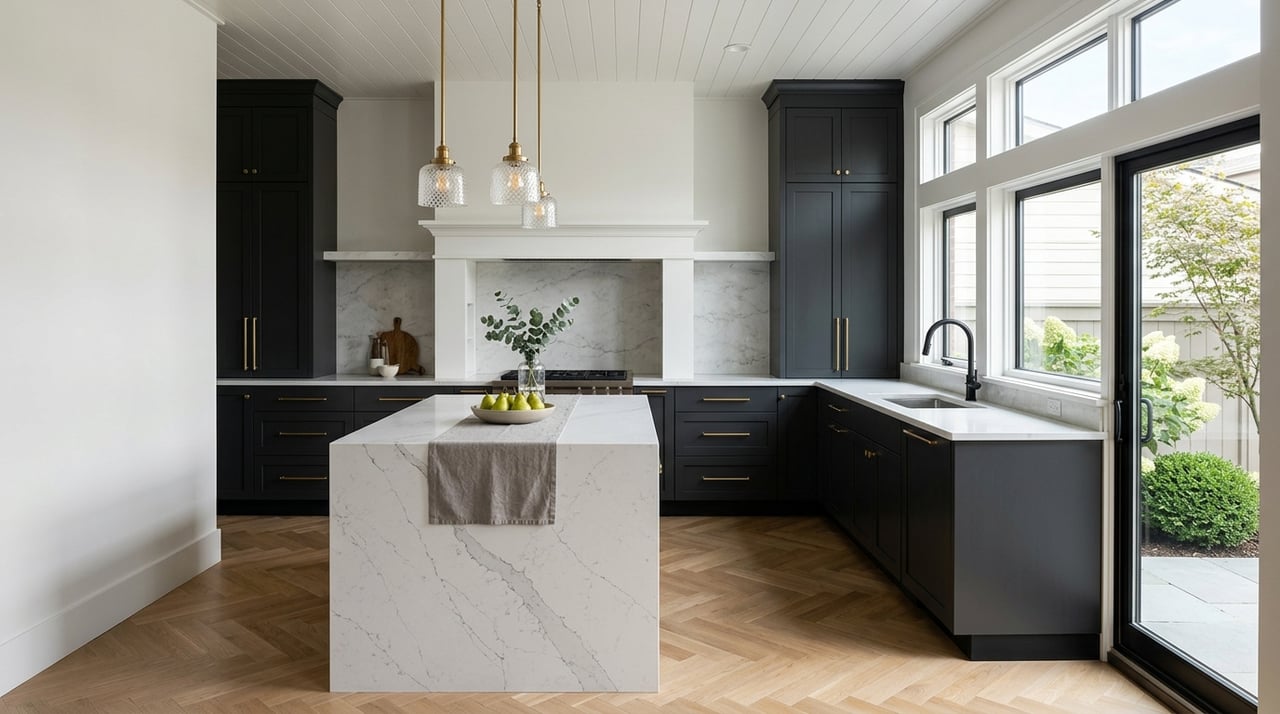
Kitchen layout is worth evaluating with the same rigor you'd apply to any other functional space. The classic work triangle between the refrigerator, sink, and range is a useful framework, but the real question is whether the kitchen allows two people to move through it comfortably, whether there's adequate counter space for how you cook, and whether the flow to the dining area makes sense for your household.
Natural light is one of the most significant quality-of-life factors in a home, and it's determined almost entirely by window placement and orientation. A home that faces east or south will read very differently in the morning than one that faces west, and a listing's photos, almost always taken in ideal conditions, won't tell you the full story. Pay attention to the direction that the windows face in the rooms you'd spend the most time in, including the kitchen, the primary bedroom, and any space you'd use as a home office.
Storage architecture matters more than most buyers realize. Closets that are placed thoughtfully, including a coat closet near the entry, adequate bedroom closet depth, and pantry or cabinet space in the kitchen, make daily routines simpler. Their absence doesn't disqualify a home, but it's worth factoring in whether there's room to add storage or whether you'd be working around the limitation indefinitely.
Kitchen layout is worth evaluating with the same rigor you'd apply to any other functional space. The classic work triangle between the refrigerator, sink, and range is a useful framework, but the real question is whether the kitchen allows two people to move through it comfortably, whether there's adequate counter space for how you cook, and whether the flow to the dining area makes sense for your household.
Interior Features To Evaluate Intentionally
- Window size, placement, and orientation in the rooms you'd use most, noting how light moves through the space.
- Ceiling height throughout the home, since variation between floors or between rooms can affect how a space feels.
- Closet depth and placement, particularly in bedrooms and near high-traffic entry points.
- Kitchen workflow, including counter space, cabinet storage, and the relationship between the cooking and dining areas.
- Bathroom layout and flow.
FAQs
How Do I Know if a Home's Layout Can Be Changed?
The key question is whether the walls you'd want to move are load-bearing. Exterior walls almost always are; interior walls vary depending on how the home was framed. A structural engineer or experienced contractor can assess this, and it's worth doing before you commit to a purchase that depends on a specific renovation.
Does Architectural Style Affect Resale Value?
In a market like Lynnfield, certain styles tend to have broader appeal and sell more quickly, but condition and location are typically stronger drivers of value than style alone. A well-maintained Cape Cod-style or ranch home in a desirable location will outperform a poorly maintained space. Focus on structural integrity and functional layout over stylistic preference.
How Much Should Renovation Potential Factor Into My Decision?
It depends on your timeline and capacity. If you're planning to move in and live comfortably for several years before tackling updates, make sure the home works for your life as-is. If you're ready for a project, renovation potential can be a real asset, particularly if the home is priced to reflect its current condition.
The Home That Works Is the One Worth Having
A home's value to you isn't determined by how it photographs or how it presents at an open house. It's determined by how it functions on an ordinary Tuesday, how well it holds up over years of use, and how much room it gives you to live the life you're planning.
Lynnfield offers the kind of housing stock where that search is genuinely rewarding. The variety is real, the quality of the market is strong, and the right property is out there. When you're ready to approach your search with intention, I'm here to guide you through it. Reach out to me, Louise Touchette, and let's find the home that fits.
Lynnfield offers the kind of housing stock where that search is genuinely rewarding. The variety is real, the quality of the market is strong, and the right property is out there. When you're ready to approach your search with intention, I'm here to guide you through it. Reach out to me, Louise Touchette, and let's find the home that fits.